New to Collecting? Start Here
Which box to buy, what makes a card special, how to read odds, and how to keep from overpaying. Everything we'd tell a friend before their first rip.
- Best for
- First-time buyers
- Example product
- 2026 Topps Chrome
- Prices checked
- Oct 7, 2026
- Read time
- About 12 minutes
Walk into a card shop for the first time and it’s a wall of boxes that all look the same, priced anywhere from $40 to over $800. They’re the same cards in different packaging, and the packaging decides almost everything about what you’ll pull.
This guide walks through it in the order you’ll actually run into it: picking a box, figuring out what you pulled, knowing the odds, protecting the good stuff and finding out what it’s worth. We use 2026 Topps Chrome Baseball as the example because it comes in nearly every format. The ideas carry over to football, basketball, hockey and every other brand.
Choosing your box
Same product, five boxes. Retail boxes are cheaper and easy to find. Hobby boxes cost more and carry the guaranteed hits.
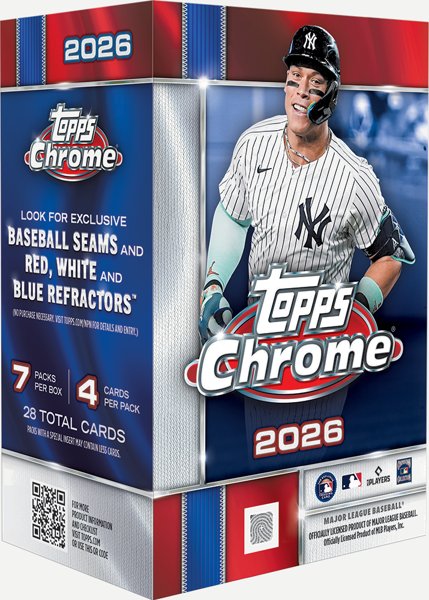
Value box
- Packs
- 7 × 4
- Cards
- 28
- Hits
- None guaranteed
- Only here
- RayWave parallels
- Where
- Walmart, Target, GameStop
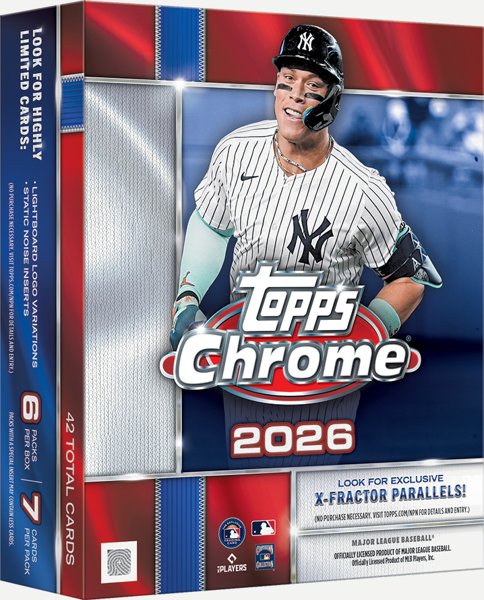
Mega box
- Packs
- 6 × 7
- Cards
- 42
- Hits
- None guaranteed
- Only here
- X-Fractor parallels
- Where
- Big-box stores, GameStop
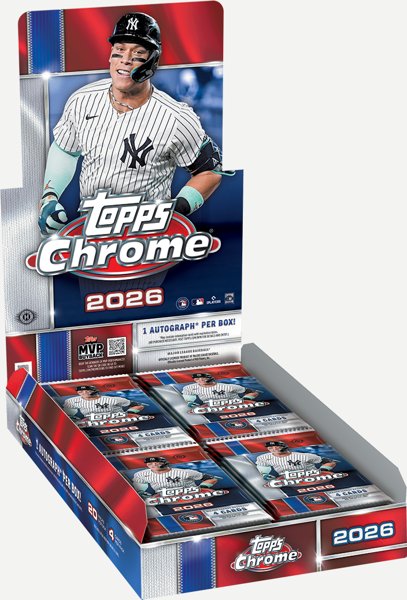
Hobby box
- Packs
- 20 × 4
- Cards
- 80
- Hits
- 1 autograph
- Only here
- Prism Refractors
- Where
- Card shops, online
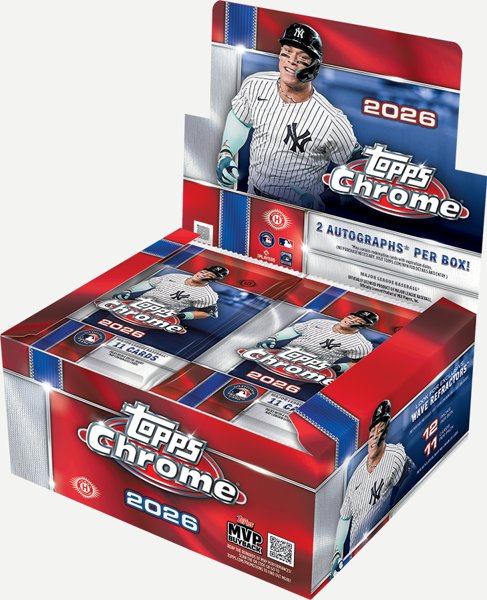
Jumbo box
- Packs
- 12 × 11
- Cards
- 132
- Hits
- 2 autographs
- Only here
- Wave parallels
- Where
- Card shops, online
Breaker's Delight
- Packs
- 1 × 12
- Cards
- 12
- Hits
- About 2 autos, no base
- Only here
- Geometric parallels
- Where
- Mostly sold to breakers
Box images: Topps. Breaker's Delight is shown as a drawing.
Retail is what you’ll see at Walmart, Target and GameStop. It’s the cheapest way in and the best way to find out if you even like opening packs. No hits are guaranteed, but retail boxes get their own exclusive parallels, and some of them sell well.
Hobby boxes come from card shops and hobby retailers. You pay more for a guaranteed autograph and better odds on almost everything. When people talk about chasing a product’s big cards, they mostly mean hobby.
List price is not what you’ll pay. Hot products sell out at list and get resold. On the day we checked, one big online retailer had the $69.99 Mega at $109.95 and the $249.99 Hobby box at $599.95. If a box’s market price is double its list price, that’s the hype talking, and it makes your odds of getting your money back worse.
Our take: if you’re brand new, buy one retail box for fun, then spend the next $50 on a single card of a player you like. You’ll learn more from comparing the two than from anything we can write.
Understanding the cards
What makes one card worth a dollar and the next one worth a hundred.
Here are five cards from our own shelf. Each one shows something from the list below.
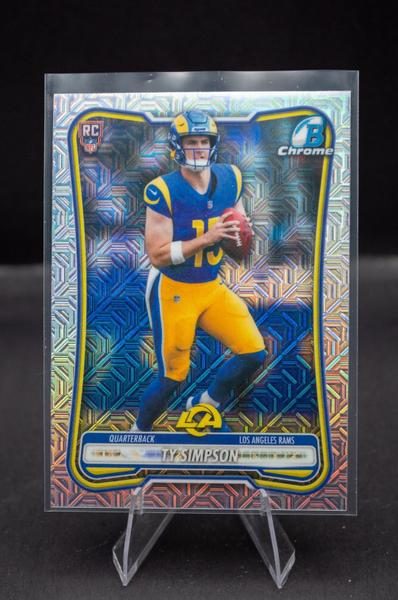
The RC logo in the top corner makes it a rookie card. The Mojo pattern is one of Bowman Chrome's refractor finishes.
See it in our shop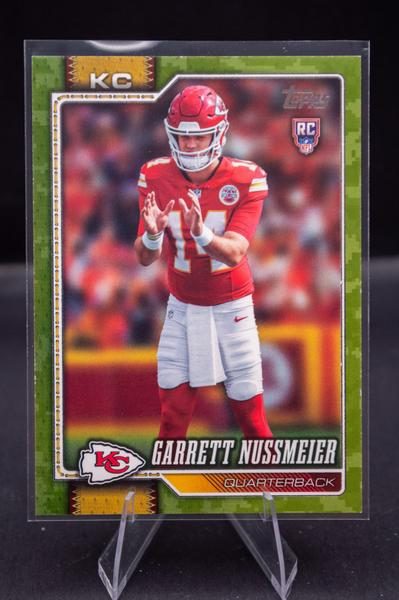
A colored parallel of his base rookie card. Only 25 were made, and the number is stamped on the card.
See it in our shop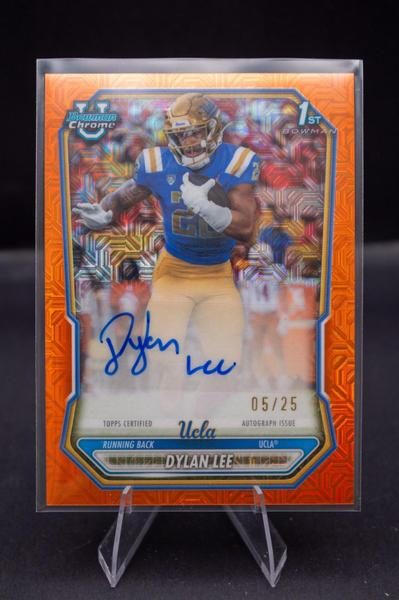
Signed and numbered 05/25. The "1st" logo marks his first Bowman card as a prospect.
See it in our shop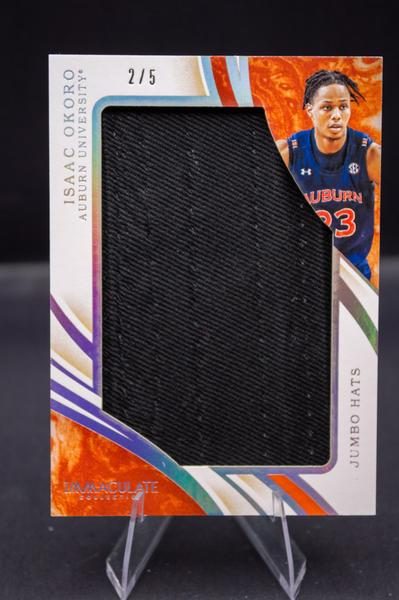
A jumbo piece of material from his Auburn days, numbered to five. Read the back of any relic to see where the piece came from.
See it in our shop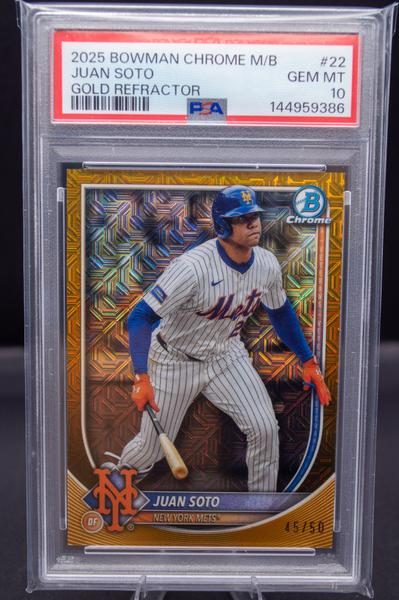
Graded and sealed by PSA. The label shows the card, the grade and a cert number you can look up on PSA's site.
See it in our shopSwipe for more
The standard cards that make up the set. 2026 Topps Chrome has 300 of them. Most packs are mostly base, and most base cards sell for very little.
A player's first official card after his pro debut, marked with an RC logo. Bowman has 1st Bowman cards that come even earlier, and collectors argue about which is the true rookie.
A themed set inside a product, designed as a chase. Chrome's include Helix, Ultraviolet and World Series at Night.
The same card in a different color or finish. Many are numbered. The full run of colors is called the rainbow.
Stamped with its print run, like 23/99. Lower is rarer. A 1/1 is the only copy. Watch for "eBay 1/1" in listings, which just means the seller thinks no one else has one listed.
Short prints and super short prints: cards printed in smaller numbers, often with no stamp to tell you. In 2026 Chrome, image variations fall 1 in 103 hobby packs and the SSP versions 1 in 5,115.
Signed on the card or on a sticker. Topps says neither is objectively better, but most collectors pay more for on-card.
A piece of jersey, bat or patch. Game-used means worn in a real game. Player-worn and event-worn usually means a photo shoot. The back of the card tells you which.
A card that falls about once per case of boxes. Topps called Helix and Chrome Exposé the case hits in 2025 Chrome Update.
A code card you trade in on Topps' site for the real card later, usually because it wasn't ready when packs were made. Check the expiration date printed on it.
Reading the odds
Every pack has an odds chart. Here's how to read it without fooling yourself.
Odds are written as 1:N packs. “1:24” means that across the whole print run, about one in every 24 packs has that card. It’s an average. Your box can have none, or three. Odds also change by format: the same card can be 1 in 341 hobby packs and 1 in 5,451 Mega packs.
Here’s the 2026 Topps Chrome Refractor rainbow, hobby odds from the published chart:
Odds are per hobby packs. Longer bar, harder to pull.
Now put a number on it. A Gold /50 is 1 in 341 packs, and a hobby box has 20 packs:
Even a full 12-box case is close to a coin flip for one specific color. That’s why “one per case” cards are so expensive, and why chasing a single card by buying boxes almost always costs more than buying the card. We break down odds like this for new releases in our By The Odds series.
Protecting your cards
Supplies are cheap. Dings, scratches and bent corners are not.
- 01
Penny sleeve
About 3¢ eachA soft clear sleeve. Put every card you care about in one the moment it comes out of the pack.
- 02
Toploader
About 25¢ eachRigid plastic for storage and shipping. Sleeve first, then toploader.
- 03
Semi-rigid
About 8¢ to 16¢Card Saver style holders with a lip. This is what PSA asks for when you send cards to grade.
- 04
Magnetic one-touch
About $2 to $4A thick magnetic case for display. Match the pt size to the card thickness.
- 05
Graded slab
$17 to $60+ to gradeSealed by a grading company with a grade on the label. See section 06.
One more: team bags, the resealable bags that go over a toploader, keep dust out and a card from sliding out in the mail. PSA specifically asks you not to send toploaders, tape or sticky notes with a grading order.
What's it worth?
Prices people ask for mean very little. Prices people paid mean everything.
Use sold listings, not asking prices. On eBay, search the exact card, then filter to Sold Items. Match the parallel, the number and the condition. “Comps” is just hobby shorthand for comparable sales.
Watch out for Best Offer. When a seller accepts an offer, eBay’s sold results still show the original asking price, not what the buyer actually paid. Those sales make a card look more valuable than it is. Tools like 130point show the accepted offer amount.
Other tools worth knowing:
- Card Ladder tracks sales history and price indexes. eBay uses its data in its own price guide. Free, with a $20/month Pro plan.
- CollX is a free phone app that identifies a card from a photo and estimates value. It’s handy for sorting a pile, but always check real sales before you buy or sell.
If a price looks too good, it usually is. A card listed 40 to 50% under every recent sale is a red flag for a fake or a trimmed card.
Grading, and when it's worth it
A grade from a trusted company can multiply a card's value. Most cards aren't worth sending.
Grading companies inspect a card’s corners, edges, surface and centering, give it a grade from 1 to 10, and seal it in a plastic slab. A PSA 10 is the grade most people chase. Prices went up across the board in September 2026. Here’s the cheapest open tier at each company when we checked:
| Company | Cheapest tier | Turnaround | Notes |
|---|---|---|---|
| PSA | $59.99 | 90 to 100 business days | Value tiers paused. Biggest resale market. |
| SGC | $50 | 40+ business days | Raised from $18 on Sept 2, 2026. |
| CGC | $17 bulk, $20 economy | 150 / 90 working days | Bulk needs 25 cards. |
| BGS (Beckett) | About $17.95 | 75+ business days | Beckett’s site has been down since Sept 9. Confirm before sending. |
The rule of thumb: only grade a card if the graded version sells for at least three times your total cost, counting the fee and shipping both ways. At today’s prices, that rules out almost anything worth under $50 raw. And plenty of pack-fresh cards come back a 7 or 8, not a 10.
What collectors tell beginners
We read through forum threads, columns and shop-owner advice. The same handful of points came up again and again.
“collect what you like, plain and simple”
“Skip the high priced packs and boxes and just buy singles.”
“Buy the card.......not the plastic.”
“patience is your friend here”
“If a deal looks too good to be true, it probably is.”
“Staying within your budget might be the single most important tip.”
Where most people agree:
- Collect what you actually like. If you only buy what’s hot, you’ll end up with cards you don’t care about.
- Buying the single you want is cheaper than chasing it in packs.
- Pick a focus: a player, a team or a set. Nobody collects everything.
- Set a budget before you walk in, especially at a show.
- Watch a card’s sales for a while before buying. Don’t buy the morning after a big game.
- Opening boxes loses money on average. Flipping is harder than it looks once eBay takes its roughly 13%.
- Learn what fakes, trimmed cards and fake slabs look like. Look up a slab’s cert number on the grader’s site.
Where they don’t:
- Ripping vs singles. Lots of collectors say skip the boxes. Others say opening packs is the fun part, and that’s what they’re paying for. Both are right if you know which one you’re doing.
- Grade everything vs grade selectively. Most advice says grade sparingly. High-end collectors often buy only graded cards.
- Which grader. PSA sells for the most. Some collectors swear by BGS for modern chrome or SGC for vintage.
- Hobby vs investment. Some treat cards like stocks. Plenty of longtime collectors say that’s how you stop having fun.
On breaks: a break is when someone opens a case live and buyers pay for a team or a spot. Pick-your-team breaks let you choose what you’re paying for. Random-team breaks are closer to a lottery, and there’s an open legal fight over whether some of them count as gambling. If you try one, know which kind it is.
Card shops and shows
The best place to learn is in person. A few habits make it go smoother.
Swipe for more
Never reach into a case or pick up a card from a dealer's table without asking first.
Make a reasonable offer and decide quickly. Dealers often come down 10 to 20% from sticker. Offering half is insulting.
Small bills. Show ATMs can charge $5 or more per withdrawal, and cash helps a deal.
See what's out there before you buy at the first table. Late in the weekend, dealers are more open to deals.
Sleeves, toploaders and a want list. Use your phone to check sales, but some dealers bristle if you do it before saying hello.
A good shop lets you handle cards and prices near market. Be wary of pressure, prices far under market, or any 'this is gonna be huge' pitch.
Glossary
The terms you'll hear in shops, breaks and comments.
- Base
- The standard, most common cards in a set.
- Insert
- A themed set inside a product, made as a chase.
- Parallel
- A version of a card in a different color or finish.
- Refractor
- Topps Chrome's rainbow-shine finish.
- SuperFractor
- The gold-swirl 1/1 parallel in Topps Chrome.
- Numbered
- Stamped with its print run, like 23/99.
- 1/1
- A one-of-one. The only copy.
- SP / SSP
- Short print and super short print.
- RC
- Rookie card: a player's first official card after his debut.
- 1st Bowman
- A prospect's first Bowman card, before his RC.
- Auto
- An autographed card, on-card or sticker.
- Relic
- A card with a piece of jersey, bat or other memorabilia.
- Patch
- A relic swatch, often multicolored, from a logo or number.
- RPA
- Rookie patch autograph.
- Hit
- An autograph or relic card. The valuable pulls.
- Case hit
- A card that falls about once per case.
- Hobby
- Boxes sold through card shops, with guaranteed hits.
- Retail
- Boxes sold at big-box stores. Cheaper, fewer hits.
- FOTL
- First Off The Line. An early hobby run with its own parallels.
- Wax
- Sealed, unopened packs and boxes.
- Rip
- To open packs.
- Break
- Opening product live, where buyers pay for teams or spots.
- Comp
- A recent sale of the same card, used to price it.
- Raw
- Ungraded.
- Slab
- A graded card sealed in a grading company case.
- Gem Mint
- The top regular grade: PSA 10, BGS 9.5, SGC 10, CGC 10.
- Pop report
- How many copies of a card a grader has graded at each grade.
- Centering
- How evenly the image sits inside the borders, like 55/45.
- Redemption
- A code card you trade in for the real card later.
- PC
- Personal collection. Cards you're keeping.
- Flip
- Buying to resell quickly.
- Trimmed
- A card with edges cut to fake a better grade. It can't be graded.
About this guide
Box details, prices and odds are for 2026 Topps Chrome Baseball, checked October 7, 2026. List prices come from Topps and retailers. The card photos are our own cards. Grading prices change often, so check the company’s site before you send anything.
Community advice comes from forum threads, hobby columns and shop owners. We couldn’t pull Reddit threads for this version, so it leans on the sources below.
Sources
Boxes and odds: Topps, Checklist Insider, Baseball Cardpedia, GameStop, Just Baseball, Dave & Adam’s. Card types: Topps Ripped, Topps on autos, SI on relics, Topps on case hits, Topps redemptions.
Protection and grading: PSA shipping guide, PSA prices, SI on SGC, CGC, CardGrade on BGS, Card Shop Finder on supplies, Misprint on when to grade.
Value and advice: hobbyDB on Best Offer, Card Ladder, shop red flags, show etiquette, first show guide, flipping margins, breaks and gambling, plus the quoted sources above.